HISTORICAL 3D MODELS · DIGITAL DOWNLOADS
CARLO CESTRADIGITAL PRODUCTIONS
Home / CGI Models / Lamboglia-2 type Amphora
CGI / Digital 3D Model

Lamboglia-2 type Amphora

Choose the version and license that best fits your project.

Available versions & licenses

Choose a product version
Selected version$4.99USD
Included download files

File names only. Secure downloads become available after purchase.

License terms for selected version

Read the license conditions before purchasing. PDFs open in a new tab.

Digital products. Digital products only. Review the selected version and its license before purchase.

Description

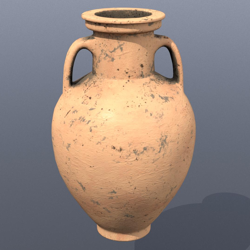
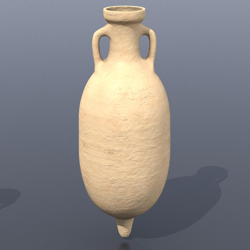
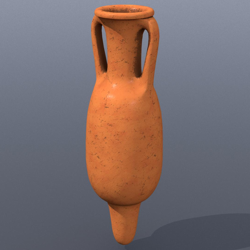
Amphora for the transport of wine and oil produced along the Adriatic coasts of Italy in the II-I centuries BC.

Technical Specifications

FormatLightwave 2018, OBJ, FBX, Blender 3, glTF
Compatibility3ds Max, Blender, Cinema4D, Houdini, Lightwave, Maya, Unity, Unreal Engine, Other
RiggedNo
GeometryPolygon mesh
Polygons Number6128
TexturesPBR
UV MappingYes

Historical Background

The Lamboglia 2 is a prominent type of ancient Roman transport amphora utilized extensively during the Late Republican period, primarily from the late 2nd century BC to the late 1st century BC. Named after the renowned Italian archaeologist Nino Lamboglia, it serves as a critical chronological marker for maritime trade routes throughout the Mediterranean and Adriatic seas.

Origins and Production
• Primary Region: The vast majority of Lamboglia 2 amphorae were produced along the Adriatic coast of Italy (spanning from Istria down to Apulia).
• Imitations: Notable Campanian variants and imitations from the Vesuvian region have also been identified in western Mediterranean shipwrecks.
• Succession: In the final decades of the 1st century BC (around 50–30 BC), the Lamboglia 2 underwent a morphologic transition and was completely replaced by the early imperial Dressel 6A type.

Primary Contents
While initially debated by earlier scholars as exclusively olive oil containers, residue and epigraphic analysis have firmly established its primary purpose:
• Wine: It was predominantly engineered to transport Adriatic wine. Internal resinous linings are frequently found, a common method used to seal the clay against liquid alcohol.
• Olive Oil: It occasionally served to transport olive oil, especially depending on the sub-regional variant of production.
• Secondary Reuse: Due to their durable nature, excavated examples occasionally reveal secondary reuse for storing items like fish sauces, olives, pine resin, or volcanic sand.

Morphology and Physical Features
• Body Shape: It features a cylindrical neck, a pronounced or structural shoulder, and a distinctly elongated, tapered body ending in a pointed foot or spike (spike toe).
• Handles: Two vertical ribbon handles run symmetrically from just below the rim down to the shoulder.
• Epigraphy: Archeologists frequently identity these vessels via stamps (bolli) pressed into the wet clay near the rim or handles, alongside painted trade notes (tituli picti) or graffiti.

Additional Information

The object is made of quad polygons only with unwrapped and non-overlapping UV.
Two different sets of textures are included (color, ambient occlusion, roughness, specular, normal and bump) to get the same amphora with two different materials.
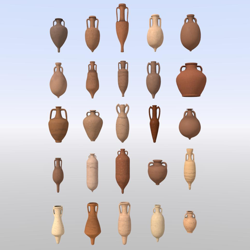
Discover more models

You may also like

View collection →