Home / Modelli CGI / B4Y HA-327
Avviso sulla risoluzione delle texture: I render della galleria potrebbero essere stati realizzati con texture a risoluzione superiore rispetto alla versione scelta. Le texture a risoluzione inferiore potrebbero mostrare meno dettagli. Controlla le specifiche della variante selezionata.
CGI / Modello 3D digitale
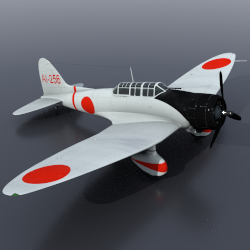
B4Y HA-327
Scegli la versione e la licenza più adatte al tuo progetto.
Versioni e licenze disponibili
Versione selezionata$45.00USD
File ZIP inclusi
I download protetti saranno disponibili dopo l’acquisto.
Download gratuito
Non servono registrazione, dati di fatturazione o PayPal. Ogni file si scarica separatamente.
Condizioni della licenza selezionata
Leggi le condizioni di licenza prima di acquistare. I PDF si aprono in una nuova scheda.
Prodotti digitali. Solo prodotti digitali. Controlla la versione selezionata e la relativa licenza prima dell’acquisto.
Descrizione
The B4Y carrier torpedo bomber (Navy Type 96 Carrier Attack Bomber) was used by the Imperial Japanese Navy Air Service from 1936 to 1943.
Specifiche tecniche
| Formato | Lightwave 2018, OBJ, FBX, Blender 3.0+ |
|---|---|
| Compatibilità | 3ds Max, Blender, Cinema4D, Houdini, Lightwave, Maya, Unity, Unreal Engine, Other |
| Geometria | Polygon mesh |
| Numero di poligoni | 72k |
| Texture | PBR |
| Mappatura UV | Yes |
Contesto storico
• Role & Service: Known officially as the Navy Type 96 Carrier Attack Bomber (Allied reporting name: "Jean"), it was a three-seat carrier-borne torpedo bomber used by the Imperial Japanese Navy Air Service from 1936 to 1943.
• Design Characteristics: Designed by Sanae Kawasaki, it was an interim biplane featuring an all-metal structure with fabric skin and a fixed landing gear system. To accelerate production, its wings were adapted from the Kawanishi E7K reconnaissance seaplane.
• Powerplant & Specs: The operational aircraft was powered by a single Nakajima Hikari 2 9-cylinder air-cooled radial engine generating up to 840 horsepower. It had a top speed of 278 km/h and carried one 800 kg torpedo or up to 500 kg in bombs.
• Combat History: The B4Y saw extensive action during the Second Sino-Japanese War and was notably involved in the controversial sinking of the gunboat USS Panay in 1937. By the time of the Pearl Harbor attack, it had been replaced in front-line duties by the monoplane Nakajima B5N ("Kate"), though it continued to serve as an advanced trainer on carriers like the Hōshō.
Informazioni aggiuntive
Color scheme: Akagi carrier in 1938.
The model was created based on blueprints, photos and historical documentation. It was created with precision in detail and in real units of measurement to be a faithful digital reproduction of the original.
Cockpit NOT INCLUDED.
LIGHTWAVE and BLENDER - The scene contains the model with uv materials assigned and in the rigged version a basic setup to control each movable part, such as ailerons, rudder, elevators, propeller and wheels.
OBJ and FBX - If you need to animate the airplane you have to make your own setup according to the 3d software you are using. You may need to reassign uv textures when open the files with different software. The aircraft is subdivided into parts each one with its uv map. To reassign textures you only have to load texture maps and assign each of them to the respective channel.
Scopri altri modelli