HISTORICAL 3D MODELS · DIGITAL DOWNLOADS
CARLO CESTRADIGITAL PRODUCTIONS
Home / Modelli CGI / Haltern-70 type Amphora
CGI / Modello 3D digitale

Haltern-70 type Amphora

Scegli la versione e la licenza più adatte al tuo progetto.

Versioni e licenze disponibili

Choose a product version
Versione selezionata$4.99USD
File ZIP inclusi

I download protetti saranno disponibili dopo l’acquisto.

Condizioni della licenza selezionata

Leggi le condizioni di licenza prima di acquistare. I PDF si aprono in una nuova scheda.

Prodotti digitali. Solo prodotti digitali. Controlla la versione selezionata e la relativa licenza prima dell’acquisto.

Descrizione

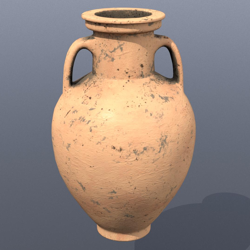
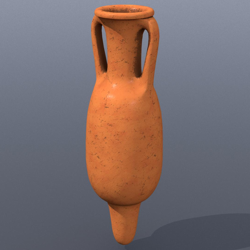
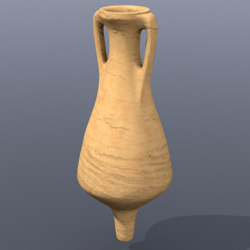
Amphora for the transport of defrutum (boiled wort) produced in Spain between I century BC and I century AD.

Specifiche tecniche

FormatoLightwave 2018, OBJ, FBX, Blender 3, glTF
Compatibilità3ds Max, Blender, Cinema4D, Houdini, Lightwave, Maya, Unity, Unreal Engine, Other
Animato / RiggedNo
GeometriaPolygon mesh
Numero di poligoni6608
TexturePBR
Mappatura UVYes

Contesto storico

The Haltern 70 is a specific type of Roman transport amphora predominantly manufactured in the Spanish province of Baetica (specifically the Guadalquivir Valley). It was used extensively from the late Roman Republic through the early Imperial period (roughly 30 BC to the Flavian dynasty in the late 1st century AD) to transport commodities like defrutum (boiled wine must), olives, and wine.

Key Characteristics & Features
• Morphology: It is a tall, irregular cylindrical container measuring approximately 0.90 to 0.95 meters in height and about 0.35 meters in maximum diameter.
• Distinctive Rim & Handles: It features a unique collared or band-like rim and two oval handles marked by a deep, vertical central groove.
• Base: It terminates in a solid, pointed conical spike which often features a distinctive internal ball of clay added during production.
• Composition: The vessels are typically made from a granular, mica-bearing fabric. Due to upside-down kiln-stacking techniques used by Roman potters, they often display a characteristic internal color variation (higher reduction in the core and inner neck).

Distribution & Archaeological Importance
Named by archaeologist Siegfried Loeschcke in 1909 after finds at the Roman military camp of Haltern in Germany, these amphorae were a staple of the Roman military supply network. While distributed widely across northwest European provinces and Britain, they are incredibly dense in the northwest of the Iberian Peninsula. For instance, excavations at the military outpost of Castro do Vieito in Portugal yielded one of the most extensive collections of Haltern 70 amphorae discovered in the Roman world.

Informazioni aggiuntive

The object is made of quad polygons only with unwrapped and non-overlapping UV.
Two different sets of textures are included (color, ambient occlusion, roughness, specular, normal and bump) to get the same amphora with two different materials.
Scopri altri modelli

Potrebbero interessarti anche

Vedi la collezione →