HISTORICAL 3D MODELS · DIGITAL DOWNLOADS
CARLO CESTRADIGITAL PRODUCTIONS
Home / CGI Models / African-I type Amphora
CGI / Digital 3D Model

African-I type Amphora

Choose the version and license that best fits your project.

Available versions & licenses

Choose a product version
Selected version$4.99USD
Included download files

File names only. Secure downloads become available after purchase.

License terms for selected version

Read the license conditions before purchasing. PDFs open in a new tab.

Digital products. Digital products only. Review the selected version and its license before purchase.

Description

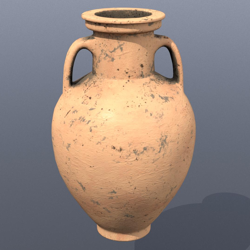
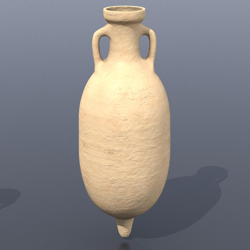
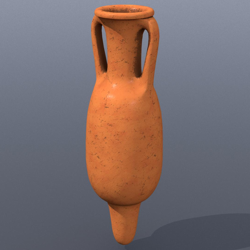
Amphora for the transport of oil produced in Tunisia in the II-V centuries AD.

Technical Specifications

FormatLightwave 2018, OBJ, FBX, Blender 3, glTF
Compatibility3ds Max, Blender, Cinema4D, Houdini, Lightwave, Maya, Unity, Unreal Engine, Other
RiggedNo
GeometryPolygon mesh
Polygons Number7664
TexturesPBR
UV MappingYes

Historical Background

An African I (or Africana I) type amphora refers to a specific class of ancient Roman terracotta shipping container manufactured in North Africa, primarily along the eastern coast of modern-day Tunisia (the ancient region of Africa Proconsularis or Byzacena).
These vessels played a pivotal role in the maritime trade networks of the western Mediterranean.

Key Architectural & Typological Features
• Shape & Design: It features a narrow, cylindrical body with a distinctive rounded or stepped shoulder, a short neck, and two thick vertical ribbon handles. The bottom tapers into a small, solid foot or spike.
• Also Known As: In standard archaeological catalogs, it is frequently referred to as Africana I Piccolo or Peacock & Williams Class 33.
• The Fabric (Clay Material): Known for its hard, coarse texture, the clay is usually brick-red or a sandwiched greyish-brown. The exterior surface is frequently coated in a characteristic cream or pale self-slip/wash with wipe marks left behind by potters.

Primary Cargo & Contents
• Olive Oil: Archaeologists have firmly confirmed that the primary commodity transported in the standard Africana I type was olive oil.
• Historical Pivot: Around the late 2nd and early 3rd centuries AD, the production of these containers marked a massive economic shift. North Africa began overtaking southern Spain (Baetica) as the absolute premier supplier of olive oil to the city of Rome and its imperial military outposts.

Chronology and Distribution
• Timeline: They were heavily manufactured and widely circulated from the late 2nd century AD through the 4th century AD.
• Trade Route Footprint: Shipwrecks across Italy, France, and Spain consistently reveal extensive cargoes of these vessels. Because they dominated western Mediterranean trade lines, isolated sherds have even been tracked down as far north as Roman military borders in Britain and the Netherlands.

Additional Information

The object is made of quad polygons only with unwrapped and non-overlapping UV.
Two different sets of textures are included (color, ambient occlusion, roughness, specular, normal and bump) to get the same amphora with two different materials.
Discover more models

You may also like

View collection →