Home / Modelli CGI / Gauloise-4 type Amphora
Avviso sulla risoluzione delle texture: I render della galleria potrebbero essere stati realizzati con texture a risoluzione superiore rispetto alla versione scelta. Le texture a risoluzione inferiore potrebbero mostrare meno dettagli. Controlla le specifiche della variante selezionata.
CGI / Modello 3D digitale
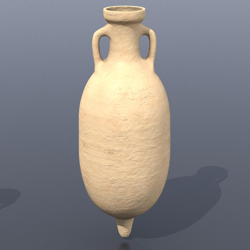
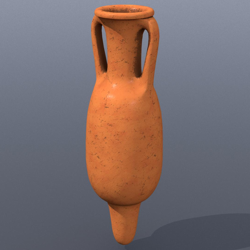
Gauloise-4 type Amphora
Scegli la versione e la licenza più adatte al tuo progetto.
Versioni e licenze disponibili
Versione selezionata$4.99USD
File ZIP inclusi
I download protetti saranno disponibili dopo l’acquisto.
Download gratuito
Non servono registrazione, dati di fatturazione o PayPal. Ogni file si scarica separatamente.
Condizioni della licenza selezionata
Leggi le condizioni di licenza prima di acquistare. I PDF si aprono in una nuova scheda.
Prodotti digitali. Solo prodotti digitali. Controlla la versione selezionata e la relativa licenza prima dell’acquisto.
Descrizione
Amphora for the transport of wine produced in Narborense Gaul in the I-IV centuries AD.
Specifiche tecniche
| Formato | Lightwave 2018, OBJ, FBX, Blender 3, glTF |
|---|---|
| Compatibilità | 3ds Max, Blender, Cinema4D, Houdini, Lightwave, Maya, Unity, Unreal Engine, Other |
| Animato / Rigged | No |
| Geometria | Polygon mesh |
| Numero di poligoni | 10224 |
| Texture | PBR |
| Mappatura UV | Yes |
Contesto storico
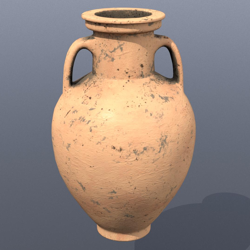
The Gauloise 4 is the standardized Gallic wine amphora par excellence, serving as the primary vessel for the large-scale regional and international trade of wine from southern France during the Roman Empire.
Key Characteristics
• Origin & Production: It was primarily produced in Gallia Narbonensis (modern-day Languedoc and Provence, France). Notable production centers included workshops in places like Lattara.
• Chronology: The form emerged in the second half of the 1st century AD (gaining massive prominence during the Flavian period) and remained in continuous production until the 3rd century AD, making it the most long-lived Gallic amphora type.
• Design & Morphology: Unlike traditional pointed Roman amphorae (like the Dressel types), the Gauloise 4 is a flat-based jar. It features a conical neck, a thickened rounded rim, and flat strap handles rising from the middle of the neck before curving downward. It was typically fashioned from a fine-textured, micaceous fabric.
• Primary Cargo: The vessel exclusively carried wine. Inscriptions on surviving vessels from maritime contexts mention premium contents such as picatum excellens (high-quality pitched wine), vetus (aged wine), and Massicum.
Distribution and Economic Impact
The Gauloise 4 dominated Western Roman trade routes. It was distributed heavily across France, Britain, Germany, the Netherlands, and Italy (with massive quantities appearing in Rome and Ostia during the Trajanic and Hadrianic periods). The massive capital at Lugdunum (Lyon) acted as a major redistribution center for this specific trade network. Its design was so highly recognizable and successful that its shape influenced eastern Mediterranean potters, eventually laying the foundation for Late Roman Amphora 1 (LRA 1) forms in regions like Cilicia.
Informazioni aggiuntive
The object is made of quad polygons only with unwrapped and non-overlapping UV.
Two different sets of textures are included (color, ambient occlusion, roughness, specular, normal and bump) to get the same amphora with two different materials.
Scopri altri modelli