HISTORICAL 3D MODELS · DIGITAL DOWNLOADS
CARLO CESTRADIGITAL PRODUCTIONS
Home / CGI Models / Flat bottom type Amphora
CGI / Digital 3D Model

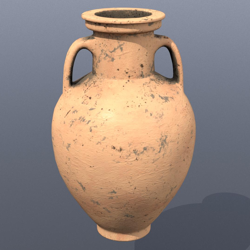
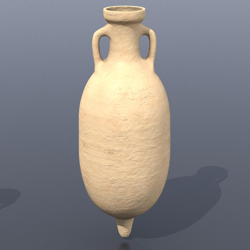
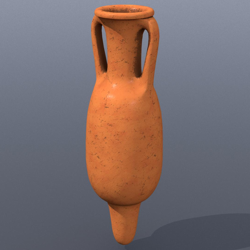
Flat bottom type Amphora

Choose the version and license that best fits your project.

Available versions & licenses

Choose a product version
Selected version$4.99USD
Included download files

File names only. Secure downloads become available after purchase.

License terms for selected version

Read the license conditions before purchasing. PDFs open in a new tab.

Digital products. Digital products only. Review the selected version and its license before purchase.

Description

Amphora for multipurpose use produced in Italy in the I century AD.

Technical Specifications

FormatLightwave 2018, OBJ, FBX, Blender 3, glTF
Compatibility3ds Max, Blender, Cinema4D, Houdini, Lightwave, Maya, Unity, Unreal Engine, Other
RiggedNo
GeometryPolygon mesh
Polygons Number8912
TexturesPBR
UV MappingYes

Historical Background

While the classic maritime transport amphora is famous for its iconic pointy base, flat-bottomed amphorae were an essential variation used throughout antiquity for land-based transport, domestic storage, military supply lines, and artistic display.

Key Archaeological Types
The standard classification system for Roman pottery, designed by archaeologist Heinrich Dressel, explicitly accounts for several flat-bottomed forms alongside regional variants:
• Dressel 28 to 31: These specific classifications mark the prominent transition to flat-bottomed structures in Roman ceramics.
• Gauloise Amphorae: Mass-produced in southern France (Languedoc and Provence) during the 2nd and 3rd centuries AD, the Gauloise flat-based amphora series (Gauloise 1 through 5) featured distinct flat bottoms. They were widely distributed across the northwestern Roman provinces to transport wine.
• Oberaden 74: A notable flat-bottomed type heavily linked to Roman military logistics and supply chains around the late Republican and early Imperial periods (approx. 20 BC to 20 AD).

Practical and Artistic Functions
Flat-bottomed amphorae filled niches where the tapered "spike" was impractical:
• Domestic & Table Use: Unlike shipping jars that required special wooden racks or soft sand to stand upright, flat-bottomed vessels could be placed directly on flat floors, tables, or shelving units.
• Art and Prestige Pieces: High-end, decorated Greek vessels—such as the Panathenaic prize amphorae or pelike—featured steady, flat bases because they were intended to be showcased as art or luxury rewards.
• Land-Based Logistics: While pointed bases excelled at nesting inside the tight, curved hulls of rolling merchant ships, flat bases were easier to manage for localized regional trade, carts, and stationary cellar storage.

Additional Information

The object is made of quad polygons only with unwrapped and non-overlapping UV.
Two different sets of textures are included (color, ambient occlusion, roughness, specular, normal and bump) to get the same amphora with two different materials.
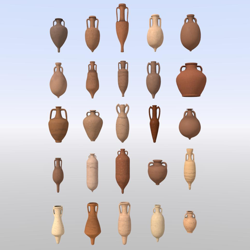
Discover more models

You may also like

View collection →