HISTORICAL 3D MODELS · DIGITAL DOWNLOADS
CARLO CESTRADIGITAL PRODUCTIONS
Home / Modelli CGI / 40mm VICKERS-TERNI
CGI / Modello 3D digitale

40mm VICKERS-TERNI

Scegli la versione e la licenza più adatte al tuo progetto.

Versioni e licenze disponibili

Choose a product version
Versione selezionata$49.00USD
File ZIP inclusi

I download protetti saranno disponibili dopo l’acquisto.

Condizioni della licenza selezionata

Leggi le condizioni di licenza prima di acquistare. I PDF si aprono in una nuova scheda.

Prodotti digitali. Solo prodotti digitali. Controlla la versione selezionata e la relativa licenza prima dell’acquisto.

Descrizione

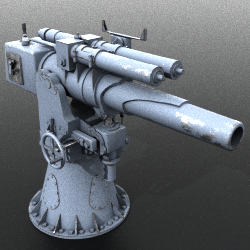
Vickers was a british 40 mm auto-cannon used as anti-aircraft gun. Vickers-Terni was an italian company born in 1905 from a joint-venture between the British Vickers and the italian "Acciaierie di Terni". The 40mm Vickers-Terni was used by Italian Navy during the Second World War.

Specifiche tecniche

FormatoLightwave 2018, OBJ, FBX, Blender 2.79
Compatibilità3ds Max, Blender, Cinema4D, Houdini, Lightwave, Maya, Unity, Unreal Engine, Other
Animato / RiggedLightwave
GeometriaPolygon mesh
Numero di poligoni12k
TexturePBR
Mappatura UVYes

Contesto storico

The 40mm Vickers-Terni (officially known in Italian service as the Cannone da 40/39) was a prominent early automatic anti-aircraft gun produced under license in Italy by the joint venture Vickers-Terni. Derived directly from the British World War I-era Vickers Automatic Model 1914 (popularly called the "Pom-Pom"), it served extensively with the Italian Royal Navy (Regia Marina).

Origins & Manufacturing
The weapon was born out of a strategic joint venture established in 1905 between the British industrial giant Vickers and the Acciaierie di Terni, along with several prominent Italian shipbuilders. The goal was to limit Italy's reliance on foreign military production. Following the acquisition of about fifty original British-built models during World War I, the company began manufacturing the autocannon at its La Spezia facility, continuing production through the early 1930s. Vickers-Terni eventually evolved through mergers to become the famous defense company OTO Melara.

Technical Specifications
• Caliber: 40 mm (1.575 inches)
• Barrel Length: 39 calibers (bore length of 1.57 meters)
• Operation: Water-cooled barrel, automatic recoil-operated mechanism
• Feed System: Originally utilized 25-round fabric belts, which were prone to stretching and jamming in humid naval environments. Later variants adopted more reliable 14-round steel-link belts.
• Rate of Fire: 200 rounds per minute (cyclical); approximately 50 to 75 rounds per minute under practical, sustained operating conditions.
• Maximum Effective Range: Roughly 1,200 yards (1,100 meters), firing a 2 lb (0.98 kg) high-explosive projectile.

Operational History
During World War I, the 40mm weapon was primarily utilized in single, manually operated mountings on Italian warships and as ground-based local defense. While highly advanced for its time, the gun struggled by the outbreak of World War II. High-speed, metal-skinned aircraft quickly outpaced the slower velocity of the 40/39 and rendered its time-fuzed ammunition ineffective.
As a result, the Regia Marina shifted the weapon's ammunition to impact-only fuzes and gradually began phasing it out in favor of the much more modern, domestic Breda 20/65 and 37/54 autocannons. Despite this obsolescence, it remained in widespread service on secondary vessels, older destroyers, and merchant auxiliaries throughout World War II.

Informazioni aggiuntive

The model was created based on blueprints, photos and historical documentation. It was created with precision in detail and in real units of measurement to be a faithful digital reproduction of the original. The object has been modeled in Lightwave and finished and texturized in 3DCoat.
LIGHTWAVE - The model comes with a simple Lightwave 2018 setup scene to animate pitch and heading rotation. UV mapped and original LW material included
OBJ and FBX - model with UV maps. You may need to reassign textures when open the Obj file with different software.
BLENDER - UV model with uv material assigned
The object has one UV map with color, normal, roughness, metalness and specular textures
Scopri altri modelli

Potrebbero interessarti anche

Vedi la collezione →